

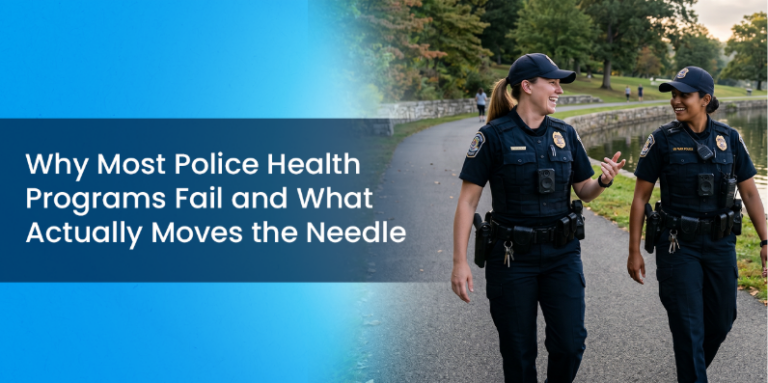
Officer Wellness Programs Are Missing the Biggest Threat to Officer Health
Police wellness programs are more common than ever. Agencies are investing in performance initiatives, mental health resources, stress management training, peer-support programs, and wellness campaigns designed to support officers both on and off duty.
Yet despite the increased attention surrounding officer wellness, one of the greatest threats to long-term officer health continues to be overlooked: Cardiovascular disease.
The reason many wellness programs fail to significantly improve long-term health outcomes is simple: they often focus on the symptoms of stress without addressing the physiological damage chronic stress creates within the body.
For law enforcement professionals, the profession itself creates ideal conditions for cardiovascular disease to develop.
The Reality Many Wellness Programs Overlook
Police work is unlike most professions. Officers operate under constant physiological stress. Long shifts, disrupted sleep, hypervigilance, adrenaline surges, critical incidents, and years of operational pressure create a cumulative burden on the cardiovascular system.
The challenge is that this damage often develops silently.
Many officers continue to pass routine physical examinations.
Many remain outwardly fit.
Many continue performing at a high level.
Until suddenly they cannot.
Heart disease in law enforcement frequently develops years before symptoms become apparent. That silent progression is what makes it so dangerous.
Unfortunately, many traditional wellness initiatives fail to account for this reality.
Stress Is Not Just Psychological; It Is Biological
Most wellness conversations focus heavily on mental health, resilience, and emotional well-being. While these factors are critically important, chronic stress also produces measurable physiological changes throughout the body.
Repeated exposure to operational stress can contribute to:
- Elevated blood pressure
- Chronic inflammation
- Hormonal disruption
- Poor sleep quality
- Metabolic dysfunction
- Accelerated plaque development
- Increased risk of heart attack and stroke
Because these changes occur gradually, exhaustion, poor sleep, weight gain, elevated blood pressure, and declining energy levels often become normalized as simply “part of the job.”
Normalization, however, does not reduce risk.
It merely delays detection.
Why Traditional Screening Often Falls Short
One of the most common misconceptions in preventive health is the belief that passing a routine physical examination equates to cardiovascular safety.
Many officers assume that normal annual testing, acceptable cholesterol levels, or a negative stress test means there is little reason for concern.
Unfortunately, standard screening methods are often designed to identify disease after it has become clinically significant not while it is quietly developing.
That distinction matters.
Many cardiovascular events occur in individuals who previously demonstrated:
- Normal cholesterol levels
- No outward symptoms
- Acceptable routine laboratory findings
- Unremarkable standard imaging studies
Early disease activity can remain hidden for years without advanced cardiovascular evaluation.
For professions characterized by chronic stress, sleep disruption, and operational demands, deeper assessment becomes increasingly important.
The Hidden Impact of Sleep Deprivation
One of the most damaging yet overlooked factors in officer health is sleep disruption.
Shift work, overtime assignments, court appearances, secondary employment, and irregular sleep schedules place enormous strain on recovery and cardiovascular function.
Research consistently associates inadequate sleep with:
- Hypertension
- Obesity
- Insulin resistance
- Depression and mood disorders
- Cognitive decline
- Increased cardiovascular risk
The human body was not designed to operate in a perpetual cycle of stress without adequate recovery.
Yet for many law enforcement professionals, that pattern continues for years or even decades.
The result is cumulative cardiovascular wear and tear that often develops unnoticed over time.
The Limitations of Surface-Level Wellness Programs
Many wellness initiatives focus heavily on awareness campaigns and general lifestyle messaging.
Awareness is valuable.
However, awareness alone does not detect disease.
Generic wellness programs often fall short because they fail to address the underlying physiological realities officers face every day.
Effective prevention requires more than:
- Motivational messaging
- Annual check-the-box screenings
- Generic health recommendations
It requires meaningful cardiovascular insight.
That means identifying risk earlier, evaluating inflammation and disease activity more comprehensively, and recognizing that outward fitness does not always reflect internal cardiovascular health.
What Actually Improves Outcomes
If agencies truly want to improve long-term officer wellness, cardiovascular health must become a central component of the conversation.
That begins with a shift from reactive healthcare to proactive detection.
The objective is no longer simply treating disease after symptoms appear.
The objective is identifying risk while intervention remains most effective.
For law enforcement professionals, this means:
- Looking beyond routine screening metrics
- Understanding the long-term effects of chronic stress physiology
- Evaluating cardiovascular risk more comprehensively
- Prioritizing sleep quality and recovery
- Taking preventive action before a crisis occurs
The earlier cardiovascular disease is identified, the greater the opportunity to improve outcomes.
Officer Wellness Must Include Heart Health
Law enforcement agencies invest substantial resources preparing officers for operational threats.
Yet one of the greatest threats to officer health often develops silently over many years, without immediate warning signs.
Heart disease rarely appears dramatic until the moment it becomes catastrophic.
That is why officer wellness cannot stop with resilience initiatives alone. It must also include advanced cardiovascular assessment, earlier detection, and long-term prevention strategies specifically designed for the realities of law enforcement.
Protecting officers is not only about helping them perform better today.
It is about helping them live longer tomorrow.
To learn more about proactive cardiovascular health strategies designed specifically for law enforcement professionals, visit Sigma Tactical Wellness